Amino Axiom is a free research information and tracking platform for the peptide research community. Its vendor directory collects supplier profiles in one place, and each profile summarizes the payment rails a vendor accepts, the number of compounds in its catalog, and ratings. The directory is available at Amino Axiom's vendor directory.
For a metabolic research program, procurement questions arrive early. A study built around incretin-axis and metabolic signaling compounds needs a supplier whose catalog covers the whole panel, whose payment methods fit the institution's purchasing rules, and whose reputation can be checked. The directory organizes those three questions into a consistent layout. This post is a reading guide for the directory and describes no use of any compound outside a laboratory setting.
How is a vendor profile organized?
A profile condenses a vendor into a small set of comparable fields. The identity of the vendor sits at the top. Below it are the payment rails the vendor lists, the compound count, and the rating summary. Because every profile follows the same layout, two vendors can be read side by side without hunting for the same fact in different places.
The value of that consistency is practical. A researcher assembling a shortlist of suppliers for a panel of metabolic compounds can open several profiles in sequence and record the same four things from each: who the vendor is, how a purchase can be paid for, how broad the catalog is, and how the vendor is rated. The profile is a summary, and the vendor's own catalog and documentation remain the primary record for any individual product.
What do payment rails tell a researcher?
Payment rails are the methods a vendor accepts for an order. They matter in a research setting because institutional purchasing offices often process only certain methods, and a purchase that cannot be documented through an approved channel cannot be made, whatever the catalog contains.
Reading the rails first is a quick way to narrow a field. A vendor whose accepted methods do not fit the purchasing rules of the institution can be set aside before any time is spent on catalog review. The remaining vendors move to the next step. This is a filtering use of the directory, and it says nothing about the quality of the material a vendor supplies.
How should compound counts be interpreted?
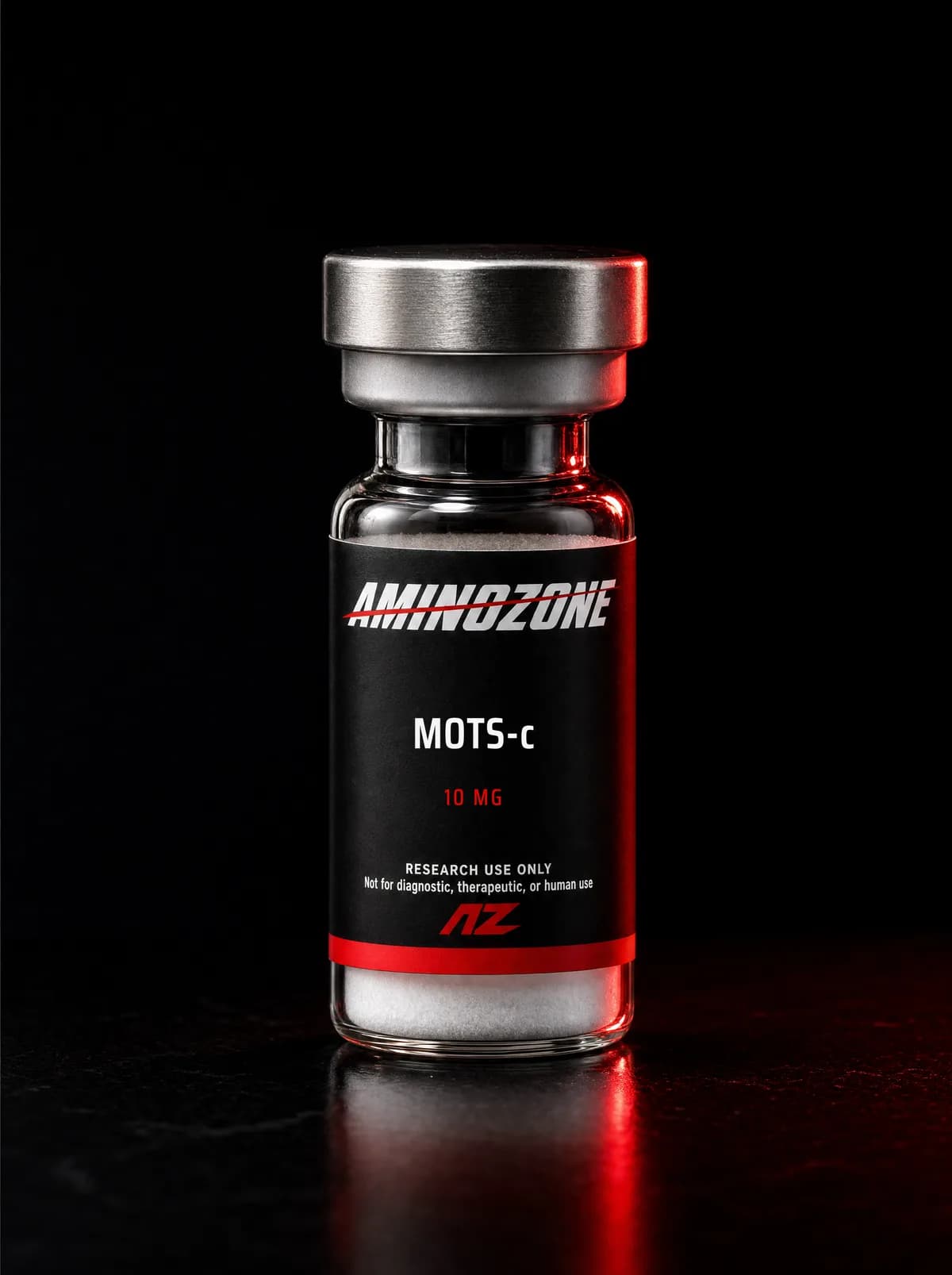
A compound count describes breadth: how many distinct research compounds a vendor lists. For a program studying several metabolic targets at once, breadth has a concrete meaning. A panel that includes Mazdutide, Cagrilintide, and MOTS-c spans a dual GLP-1/glucagon receptor agonist, an amylin analog, and a mitochondrial-derived peptide. A vendor that lists all three can supply the panel from one source, which simplifies documentation across the study.
The count has limits. It does not say anything about purity, documentation, or the consistency of any particular listing, and a narrow catalog is not inferior to a broad one. A specialist vendor with a short list may document each item more carefully than a large catalog does. The count is most useful as a coverage check against a known compound list, and least useful as a ranking.
How are vendor ratings read?
A rating is a summary of reported experience, and the first thing to check is what stands behind it. A high average from a handful of contributors carries less information than a moderate average from many. The directory presents ratings alongside the vendor profile, and the sensible habit is to read the rating together with the number of contributors, then follow up on specifics.
Ratings are also not a substitute for lot-level evidence. They say how past interactions with a vendor were reported, and they say nothing about the contents of a vial that has not been analyzed. For that, the certificate of analysis is the relevant record, and a rating is best treated as a prompt about which vendors to ask for documentation first.
How can the directory be used step by step?
A repeatable sequence keeps a supplier review consistent from one study to the next:
List the compounds in the study and note the identifiers from a catalog record, so the shortlist is matched against a fixed target.
Open the vendor directory and record the payment rails for each candidate, setting aside any that do not fit the institution's purchasing rules.
Compare compound counts against the study list to see which vendors cover the whole panel.
Read the rating summary and the number of contributors behind it, and note any vendor that needs a closer look.
Request lot documentation from the shortlisted vendors and review it against the identifiers recorded in the first step.
The first step matters more than it looks. Identifiers copied from a catalog record give the review a fixed reference. In the Amino Zone catalog, Cagrilintide is listed with CAS 1415456-99-3 and a molecular weight of 4409.01 g/mol, and MOTS-c is listed with CAS 1627580-64-6 and a molecular weight of 2174.59 g/mol. Those figures are what the lot documentation gets compared against in the last step. A vendor profile cannot supply them, and they should not be typed from memory.
What should a procurement review check beyond the profile?
The profile is where a review starts. Several things sit outside it, and each is worth confirming directly with the vendor.
The certificate of analysis for the specific lot is the main one. It reports analytical results such as HPLC purity and mass spectrometry identity confirmation, and a mass check is especially informative for larger peptides. Mazdutide, for instance, has a catalog molecular weight near 4599 g/mol, and a mass spectrum that fails to match the expected species would be visible in the lot data and invisible in any directory summary. For background on what documentation can and cannot establish, see research peptide purity standards in 2026.
Regulatory classification is another item. Rules differ by jurisdiction and change over time, so the institution's compliance office is the authority to ask, and the directory is a way of deciding what to ask about, not an answer.
Where does the vendor directory fit among other Amino Axiom sections?
The directory sits beside the platform's other reference sections. The compound library describes what each molecule is, the price comparison tables line up listed prices, and the community section hosts discussion. The vendor directory covers the supplier side, which is why the same compound names appear across these sections.
A program that starts from the science and works toward practical questions can move in that order: identify the compounds, check the structural identifiers, and then use the directory to build a shortlist of suppliers. The platform's home page is at the Amino Axiom homepage.
Research use disclaimer
The compounds referenced in this article are supplied by Amino Zone strictly for in vitro laboratory research and analytical use. They are not drugs, dietary supplements, or foods, and are not intended for human or veterinary use. This article describes how to read a supplier directory and makes no claim about the safety or effects of any compound in a living organism. For research purposes only.
Reference
Common questions
The vendor directory lists supplier profiles for the peptide research market. Each profile summarizes the payment rails a vendor accepts, the number of compounds in its catalog, and ratings. Researchers use the profiles to organize a first-pass comparison of suppliers before reviewing documentation directly.
A compound count describes catalog breadth: how many distinct research compounds a supplier lists. It does not indicate the quality, purity, or documentation of any individual listing. A narrow catalog is not worse than a broad one, and the count works best as a filter for coverage of a study's compound set.
Payment rails determine how an institution or lab can document a purchase, since some purchasing offices only process particular methods. Listing the accepted rails on a profile lets a researcher rule vendors in or out early, before spending time on catalog and documentation review.
No. A rating summarizes reported experience and says nothing about the contents of a specific lot. The certificate of analysis for the lot in hand, with its HPLC and mass spectrometry data, remains the document that characterizes the material. Ratings help decide whom to ask; the lot documentation answers what was received.