What are the research articles on Amino Axiom?
Amino Axiom is a free research information and tracking platform for the peptide research community. Its library includes a compound reference, glossary, vendor directory, and a collection of long-form, sourced research articles. The articles section is the part aimed at literature reading: each piece takes one compound, mechanism, or methodological question and works through the published record in extended prose, with its sources attached.
The collection is available at Amino Axiom's research articles. For a metabolic research program, the practical value is that it gathers background reading in one place, organized by topic, so a researcher starting on a new compound class can orient quickly before opening primary literature.
This post describes what the articles section shows and how a researcher working in metabolic signaling might read it. It is a research-reading guide, not a product page, and nothing here describes use of any compound outside a laboratory setting.
How is a long-form research article structured?
A long-form research article differs from a database entry or a product description in several respects, and knowing the layout helps a researcher extract what is needed without reading linearly.
Articles typically open with a definition: what the compound or mechanism is, in plain technical language. That is followed by sections organized around research questions, such as how the molecule is built, what receptor or pathway it engages in cell models, and how the field measures its activity. Sources are attached so a reader can trace a statement back to the underlying publication, which is the most important feature when the goal is to decide what to read in full.
A useful reading habit is to scan the section headings first. Because each heading is phrased as a question, the headings alone form an outline of the research landscape for that topic. A reader can jump to the question that matches the current bottleneck, whether that is receptor pharmacology, analytical characterization, or experimental design, and leave the rest for later.
How can a metabolic researcher use articles to map a compound class?
Metabolic signaling covers several mechanistically distinct families, and the articles section works well as a map when a researcher is deciding how to organize a study panel. Three families that come up often in incretin and energy-metabolism research illustrate the approach.
The first is the incretin and glucagon receptor family. Mazdutide is a synthetic dual agonist of the GLP-1 and glucagon receptors, so a researcher reading about it wants background on class B GPCR signaling, cAMP assay design, and how receptor activity ratios are quantified. Articles on incretin pharmacology supply this vocabulary and point to the structural and pharmacology papers behind it.
The second is the amylin family. Cagrilintide is an amylin analog that acts through a receptor complex distinct from the GLP-1 receptor. A reader who sees both compounds in a panel needs to understand why they are paired in the same experiment and where their pathways diverge. A well-sourced article makes that distinction explicit, so the panel design reflects the mechanisms rather than convenience.
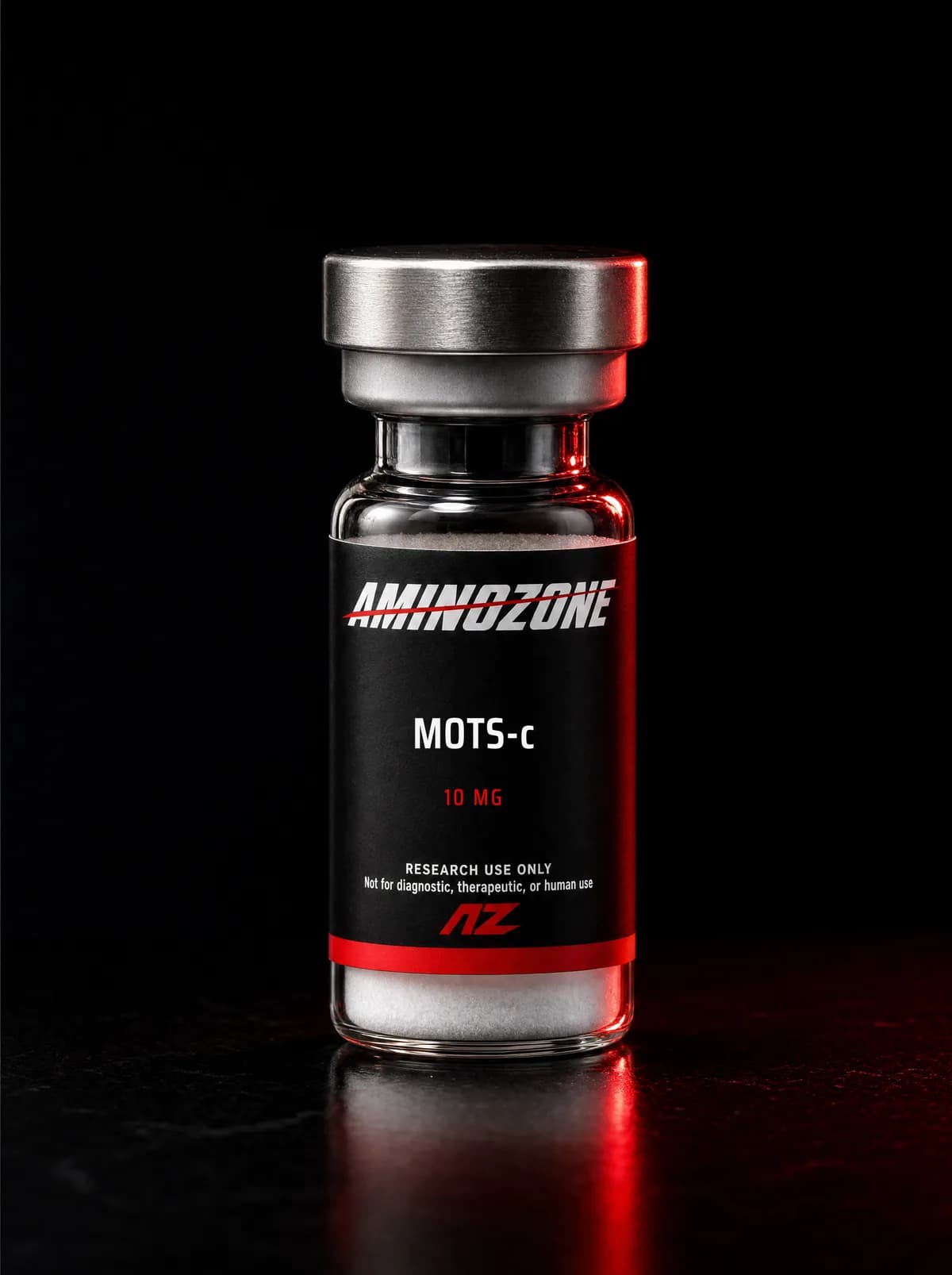
The third is mitochondrial and energy-sensing signaling. MOTS-c is a mitochondrial-derived peptide studied in AMPK and metabolic homeostasis models. It belongs to a different branch of the literature, with its own assays and its own controls. Reading about it next to the incretin material clarifies which readouts are shared across model systems and which are specific to one mechanism.
How should a researcher pair an article with a catalog record?
An article explains the science, and a compound record gives the identifiers. The two are complementary, and using them together reduces the chance of a transcription error in a methods section or an order sheet.
A practical workflow starts with the article for context. The researcher notes the compound name, the receptor or pathway of interest, and the assay formats mentioned. Next comes the compound record, where the identifiers live: CAS number, molecular formula, molecular weight, and sequence information where available. These should be copied rather than retyped from memory, and cross-checked against the supplier's certificate of analysis for the specific lot.
The Amino Zone catalog entry for Mazdutide, for example, lists CAS 2259884-03-0, formula C207H317N45O65, and a molecular weight of approximately 4599 g/mol. An article may describe the same compound in prose without repeating those figures. Keeping both documents open lets a researcher confirm that the molecule discussed in the article is the molecule on the order sheet, which is a basic but frequently skipped check when compounds have similar names or several salt and conjugate forms.
How should sources inside an article be read?
The attached sources are the main reason to prefer a sourced article over a summary. They need to be read with the same care as any secondary source, however, and a few questions are worth asking each time.
First, what type of study supports the statement: a cell-based assay, a structural study, or a computational model? In metabolic receptor research the distinction matters, because potency numbers from an engineered cell line expressing a single receptor do not transfer directly to a mixed-cell system. Second, what were the experimental conditions? Medium composition, receptor expression level, and incubation time all move reported values, and a good article flags when a comparison across studies is not like for like.
Third, how recent is the source, and has the field moved? Receptor structure work in particular has advanced quickly with cryo-electron microscopy, and older pharmacology papers sometimes predate structures that would change how their results are interpreted. A researcher can use the article's source list as a starting set, then search forward for newer citations of the key papers.
Finally, note what an article does not claim. Research articles in this lane describe mechanisms and published findings in model systems. They are not guidance for any use of a compound outside the laboratory, and a careful reader keeps that boundary in mind when summarizing the material in notes or a literature review.
How can articles support experimental design and documentation?
Beyond orientation, long-form articles are useful as a checklist for what a study should report. If several sourced articles on a compound class repeatedly mention the same confounders, such as albumin content in the medium for lipidated peptides or receptor density in transfected lines, those are variables a new study should record from the start.
Researchers can keep a running reading log that lists, for each article, the compound, the model system discussed, the key variables flagged, and the primary sources worth retrieving in full. When the time comes to write a methods section, the log supplies a consistent set of parameters and citations. It also makes gaps visible: a compound for which the literature offers only one model system is a signal to treat conclusions cautiously.
Documentation discipline carries over to material handling records. Lot numbers, certificate of analysis dates, and storage conditions belong in the same notebook as the reading log, so that a later reader can connect a result to both the literature that motivated it and the exact material that produced it.
Where do the articles fit among the other Amino Axiom sections?
The articles are one section of a broader reference platform. The compound library gives structured records, the glossary defines terminology that appears in the articles, and the vendor directory covers supplier information. A researcher moving between them might read an article, check a term in the glossary, and confirm identifiers in the compound record, all within one session.
The advantage of keeping literature reading and reference records on the same platform is consistency of naming. Compound names, abbreviations, and category labels are shared across sections, which reduces confusion when the same molecule appears under several synonyms in the primary literature. For metabolic research programs that touch several compound families at once, that consistency saves time during the literature phase, when most of the avoidable errors happen.
To browse the collection, visit Amino Axiom and open the articles section directly at the link above.
Research use disclaimer
The compounds referenced in this article are supplied by Amino Zone strictly for in vitro laboratory research and analytical use. They are not drugs, dietary supplements, or foods, and are not intended for human or veterinary use. This article describes how to read published research materials and makes no claim about the safety or effects of any compound in a living organism. For research purposes only.